The Man Who Revolutionised Tango – Astor Piazzolla

argentine tango classes near me

Once described as “the world’s most foremost composer of tango music,” Astor Pantaleón Piazzolla established nuevo tango (new tango), a blend of jazz, classical music, and tango.

Nuevo Tango BrisbanePiazzolla was born on March 11, 1921 in Mar del Plata, Argentina. His parents were Italian immigrants Vicente ‘Nonino’ Piazzolla and Assunta Manetti. At birth, Piazzolla’s right leg was twisted due to polio and he underwent repeated operations until it was fixed, albeit one leg was slightly shorter than the other.

In 1925, the family moved to New York, where they lived until 1936. They first went to New Jersey, then Manhattan, near Little Italy. While the young Piazzolla adjusted well enough to American life, he was expelled from school for fighting and consequently earned the nickname ‘Lefty’ because of his left-hand punch.

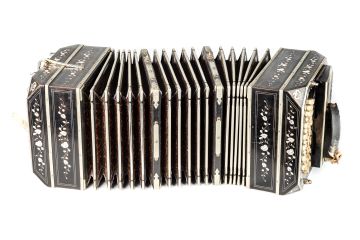
It was around this time when he received his first bandoneon at age eight. He learned to play this instrument along with the piano. Initially, Piazzolla was not argentine tango classes near mekeen on the gift. In one interview, he said, “[My father] brought it covered in a box, and I got very happy because I thought it was the roller skates I had asked for so many times. It was a let-down because instead of a pair of skates, I found an artifact I had never seen before in my life. Dad sat down, set it on my legs, and told me, ‘Astor, this is the instrument of tango. I want you to learn it.’ My first reaction was anger. Tango was that music he listened to almost every night after coming home from work. I didn’t like it.”

In 1929, The Great Depression struck and the family moved back to Mar del Plata in 1936, only to return to New York nine months later. At 11, Piazzolla began playing his bandoneon on stage and started taking lessons with Andres D’Aquila, an Argentine pianist. He also made his first recording, ‘Marionette Spagnol,’ and composed his first tango, ‘La Catinga,’ which has never been recorded.

Piazzolla was introduced to jazz in New York, when he would sneak into clubs, where Duke Ellington, Cab Calloway, Benny Goodman and other jazz icons would play. Meanwhile, it was pianist and neighbour Bela Wilda, who taught him the piano and introduced him to classical music. One of Piazzolla’s earliest and long-lasting influences was Johann Sebastian Bach. Wilda even taught him to play Bach on the bandoneon.

Argentine Tango Classes BrisbaneAt age 12, Astor Piazzolla’s life would change. It was 1933 and he learned one of his idols Carlos Gardel was in town. Piazzolla went to Gardel’s building and what followed next was something straight out of a movie. Gardel’s assistant was outside and had left his key inside the room. Piazzolla volunteered to climb the fire escape and went in through the window to wake the sleeping Gardel. Turns out, it was lyricist Alfredo Le Pera. One thing led to another and the two became good friends. Piazzolla eventually became Gardel’s translator and his bandoneon player.

The Piazzolla’s moved back to Argentina in 1937 and the teenage Piazzolla immersed himself in tango. By the time he was 17, he moved to Buenos Aires and was invited to play the bandoneon in one of the most prestigious tango orchestras at the time, the Anibal Troilo Orquestra, and eventually became their arranger.

Piazzolla formed his own orchestra in 1946, the Astor Piazzolla Y Su Orchestra Tipica or commonly referred to as ‘The 1946 Band’. During this time, he composed his first “formal” tango, El Desbande as well as scores for films. In 1949, Piazzolla started in earnest his musical experiments, one of which, titled ‘Buenos Aires,’ was submitted to the Fabien Sevitzky Competition, where it won first prize. When the piece was performed by Sevitzky, however, it was met with negative reaction, with many complaining a bandoneon had no place in an orchestra.

Piazzolla travelled to France for his Paris Conservatory scholarship. Here, he played one of his tango-classical experiments, ‘Trifunal,’ for the great music educator Nadia Boulanger and she encouraged him to press on. And so, in 1955, tango nuevo was born with the formation of the group Octeto Buenos Aires. Even with growing criticism, Piazzolla carried on, touring the world with his unique blend of tango, jazz, and classical music. His favourite expression for tango nuevo was the bandoneon, violin, bass, piano, and electric guitar.

After a period of great productivity, Piazzolla had a heart attack in 1973. Shortly after, he moved to Milan, Italy and a year later he composed the infamous hit, ‘Libertango.’ This symbolised his break from classical tango to something new.

In 1985, he was named an exceptional citizen of Buenos Aires and in 1986, received the Cesar Prize for his score of the film ‘El Exilio de Gardel.’ One of his most well-known performances was in 1987 in Central Park in New York to a crowd of over 4,000. In 1990, Piazzolla suffered a massive stroke and two years later, the genius Tanguero died in Buenos Aires on July 4. He leaves behind more than 1,000 works and the legacy of having revolutionized tango forever.

Francisco Canaro, A True Star of Tango

Canaro, Francisco

Uruguayan composer Francisco Canaro is considered one of the tango world’s most popular artists. His recordings, both traditional tango and milongas, are noted as beautiful and melodic.

Canaro was born on November 26, 1888 into extreme poverty, with seven other siblings. His parents were Italian immigrants. Canaro was given the nickname “Pirincho” when the midwife noticed that his hair has a fuzz and curl like the head feathers of the South American bird of the same name.

The Canaro family moved from River Plate when Francisco was less than 10 years old and settled in the densely populated “conventillos,” an urban tenement in Buenos Aires. Unable to attend school, Canaro instead started working as a newspaper boy, a shoe shiner, a painter, and then as an apprentice at a can factory.

Despite his bitter upbringing, the young Canaro was enthusiastic about music at an early age. His neighbor, a cobbler, was his first teacher, showing him how to play the guitar and mandolin. While working at the factory, he built a violin out of a wooden fingerboard and the remains of an oil can. He taught himself to play this creation. According to Canaro himself, the first tango he played from heart was ‘El Llorón.’

At 18, Canaro made his professional debut as part of a trio in a town called Ranchos, a hundred kilometres outside of Buenos Aires. He started devoting himself to tango when he was introduced to bandoneonist and tango orchestra director Vicente Greco in 1908. Canaro went on to join Greco on several successful tours and produced records.

By 1915, at the age of 26, Canaro began conducting orchestras. His first headline was the first Baile del Internado, which was a comedy ball organized by the hospital interns to make fun of their doctors. The gala was held at the Palais de Glace and here, Canaro premiered ‘El Alacran’ and ‘Matasano.’ In 1916, he was the headliner once again, but for Bailes de Carnival, where he was met with such adoration that he was invited again and again. In 1921, for the Bailes de Carnival, he reunited a 32-piece orchestra, an orchestral mass unknown in tango until then.

Canaro’s music is considered to have reshaped the way society perceived tango at the time. Back then, high society did not entertain tango, at least not until Canaro’s orchestra.

Tango Lessons BrisbaneCanaro pioneered the incorporation of a singer in the tango orchestra in 1924, but only for the main part of the tango or the ‘estribillo.’ The first estribillo used by Canaro was Roberto Díaz. This ushered in the ‘estribillistas era’ from the mid-1920s to the late 1930s.

By 1925, Canaro toured the world, beginning in Paris, where tango was now in fashion. He also traveled to the United States. By 1926, his contracts expired and he was free from commitments. Canaro visited Italy to meet his grandmother.

After his absence, Canaro returned to Argentina. He also dabbled in musical theatre and film. He founded Rio de la Plata productions, although none of his projects proved to be commercial hits.

In 1956, he published his memoirs, ‘Mis 50 Años Con El Tango” (My 50 Years with Tango).’ Canaro was forced into retirement after being diagnosed with Paget’s Disease. He eventually passed in 1964 at the age of 76.

Carlos Di Sarli, The Lord of Tango

Argentine Tango Lessons near me

Carlos Di Sarli earned the nickname ‘The Lord of Tango’ (‘El Señor del Tango’) when his career rose along with the ‘Golden Age of Tango.’ Known for his signature pair of glasses, Di Sarli was a prolific orchestra leader, composer and pianist during his time and well after.

Born on January 7, 1903 in Bahia Blanca in Southern Argentina as Cayetano Di Sarli, he was the eighth child of Italian immigrant Miguel Di Sarli and Serafina Russomano, who was the daughter of the tenor singer Tito Russomano. Di Sarli was exposed to music at an early age. Aside from having a singer grandfather, his brothers were musically involved as well. Domingo was a music teacher, Nicolas became a baritone, and younger brother Roque would become a pianist. Carlos himself took piano lessons.

Their father, Miguel, was the owner of a gun shop and while working here, Di Sarli suffered an accident at the age of 13, costing him an eye. Since then, he could always be seen wearing dark glasses concealing his eyes. Much to the horror of his father and his piano teacher, soon after he recovered from the injury, the young Di Sarli went on tour with a zarzuela company.

Carlos Di SarliIn between running away and making his debut, Di Sarli ended up in the province of La Pampa, where he played the piano to silent films for two years. He eventually went back to his hometown and in 1919, Di Sarli made his debut as orchestra leader at a tea room called the Cafe Express. His orchestra toured for some time, but in 1923, Di Sarli and his younger brother Roque made the move to Buenos Aires.

For the next few years, Di Sarli joined a couple of orchestras. First, Anselmo Aieta, a bandoneonist group. Then, a group led by the violinist Juan Pedro Castillo. In 1926, he joined Osvaldo Fresedo’s orchestra. Fresedo had such an influence over Di Sarli that his tango ‘Viejo Milonguero’ is dedicated to Fresedo.

In 1927, Di Sarli formed his own group, a sextet with José Pécora and David Abramsky on violin, César Ginzo and Tito Landó on bandoneón and Adolfo Kraus on bass. By 1934, Di Sarli left his group and moved to Rosario in Santa Fe province, where he joined a small band with the bandoneonist Juan Cambareri. However, in 1938, Di Sarli returned to Buenos Aires, reformed his band, and made their first recording in 1939. The recording included ‘Corazon,’ which is considered a classic. For the next decade, Di Sarli and his music flourished, recording 155 sides and being popular amongst tango dancers.

However, Di Sarli was not the easiest person to get along with. He has been described as eccentric, reserved and was very much a perfectionist. Due to his eccentricity, there was superstition surrounding his music with some believing that saying his name out loud will bring bad luck. In 1949, his orchestra members walked out on him. But Di Sarli continued recording until illness forced him to retire in 1953. This did not stop him, however, continuing to record until his final side in 1958.

Di Sarli’s musical style has been widely lauded, often described as simple, but elegant and full of nuances. He led his last concert on March 8, 1959 at the Podesa de Lanus club in Buenos Aires. He died of a terminal disease on January 12, 1960.

Sources: http://www.todotango.com/english/creadores/cdisarli.html

http://www.milonga.co.uk/tango/disarli.shtml

http://www.verytangostore.com/legends/carlos-di-sarli.html

https://endretango.com/en/who-was-carlos-di-sarli-and-why-did-he-wear-dark-glasses-all-the-time/

Osvaldo Pugliese, The Beginning of Concert-Style Tango

Tango Lessons near me

Osvaldo Pedro Pugliese is regarded as one of the “big four” composers of the Golden Age of tango, together with Juan D’Arienzo, Aníbal Troilo, and Carlo di Sarli. While D’Arienzo was considered “The King of Beat,” Pugliese was hailed as “San Pugliese” or “Saint Pugliese” for his dramatic and passionate melodies. He is also considered to have developed the concert-style tango music.

“Dramatic,” “passionate,” and “lyrical” are some of the words associated with Pugliese’s music. Female dancers would find his violin melodies excellent for decorative footwork. On the other hand, male dancers might have more difficulty as the beat is not as apparent.

Osvaldo PuglieseAt an early age, Pugliese had already been exposed to tango. He was born on December 2, 1905 to Aurelia Terragno and Adolfo Pugliese, the latter an amateur tango flautist. Meanwhile, Osvaldo’s two brothers, Vicente and Alberto, were violinists. The young Pugliese was taught to play the violin by his father and this early training allowed him to join the Odeon Conservatory. Here, he was tutored by maestros like Antonio D’Agostino, Rubione Scaramuzza and Pedro Vicente. Pugliese started playing professionally at the age of 15 as a pianist at Cafe de La Chancha.

In 1921, at the age of 16, Pugliese moved to Buenos Aires, where he met the first professional female bandoneonist in Argentina, Francisca Bernardo Cruz also know by her stage name, Paquita Bernardo. He joined her band, the Paquita Orchestra, as their pianist. They made their debut at a bar, Dominguez, and went around performing at other bars and cafes.

Pugliese eventually left the group and in 1924, joined the Enrique Pollet quartet. Around this time, he wrote one of his most famous compositions, ‘Recuerdo,’ which is considered to be the origin of stylised instrumental tango. The title, which translates to “memory,” is dedicated to Pugliese’s fond memories of his cousins, who would go to La Chancha to hear him play.

He went on to the renowned Pedro Maffia and his Orchestra, which marked the beginning of Osvaldo’s rise to maestro status. The group followed the De Caro school of music characterised by slow and languid phrasing. This would influence Pugliese’s style for the rest of his career.

As the late 1920s and early 1930s rolled on, tango was reaching its peak. During these years, Pugliese was playing at cafes and silent movie houses. He collaborated with musicians like violinist Alfredo Gobbi, bandoneonist Anibal Troilo, Pedro Laurenz, Miguel Calo, and Elvino Vardaro. In 1936, at 31, he fulfilled his dream of directing his own orchestra. He formed a sextet with Alfredo Calabró, Juan Abelardo Fernandez, bandoneonist Marcos Madrigal, Pedro Juan Rolando Curzel, violinist Potenza and Aniceto Rossi on the bass.

In 1939, he put together what’s regarded as one of the best tango orchestras in the world, Orquesta Típica Pugliese. While the lineup of musicians would vary over the years, Pugliese would work with this orchestra for the remainder of his life. The orchestra had a specific style, still following De Caro, with no drums, highly syncopated, bandoneón solos, holding notes slightly longer than expected for dramatic effect (rubato), alternating slow and fast tempos (slargando or slentando). Pugliese coined the term “yumba,” which denotes that the first and third beats should be stressed and the second and fourth beats should be played softly with a bass piano note.

Pugliese made his first recordings in 1943 while traveling the world. Some of his most raved about tangos aside from ‘Recuerdo,’ are La Yumba (1945), Negracha (1948), and Malandraca (1949).

Pugliese was a renowned and committed activist as well. In 1936, he joined the Communist Party of Argentina. This earned him the hostility of those in power and even spent time in jail. While away in prison, he kept on writing arrangements for his tango band. Pugliese was so loved by his musicians that a red carnation would be placed on the piano during his absence.

Pugliese holds multiple distinctions. He is a distinguished citizen of Buenos Aires, a Commandeur de L’Ordre des Arts et Lettres of France, and, was an Honorary Academician of the Academia Nacional del Tango. And, when tension between Pugliese and President Juan Perón’s government was eventually resolved, the great tango musician was awarded The Order of May, Argentina’s highest civilian award.

In July 25, 1995, at the age of 89, Pugliese passed away from a short illness. ‘La Yumba’ was played at his funeral. His legacy continues through his daughter Beba, and granddaughter Carla, both of whom are pianists.


Sources: http://www.interlude.hk/front/tango-beyond-piazzolla-ii-osvaldo-pugliese/

http://www.verytangostore.com/legends/osvaldo-pugliese.html

https://en.wikipedia.org/wiki/Osvaldo_Pugliese